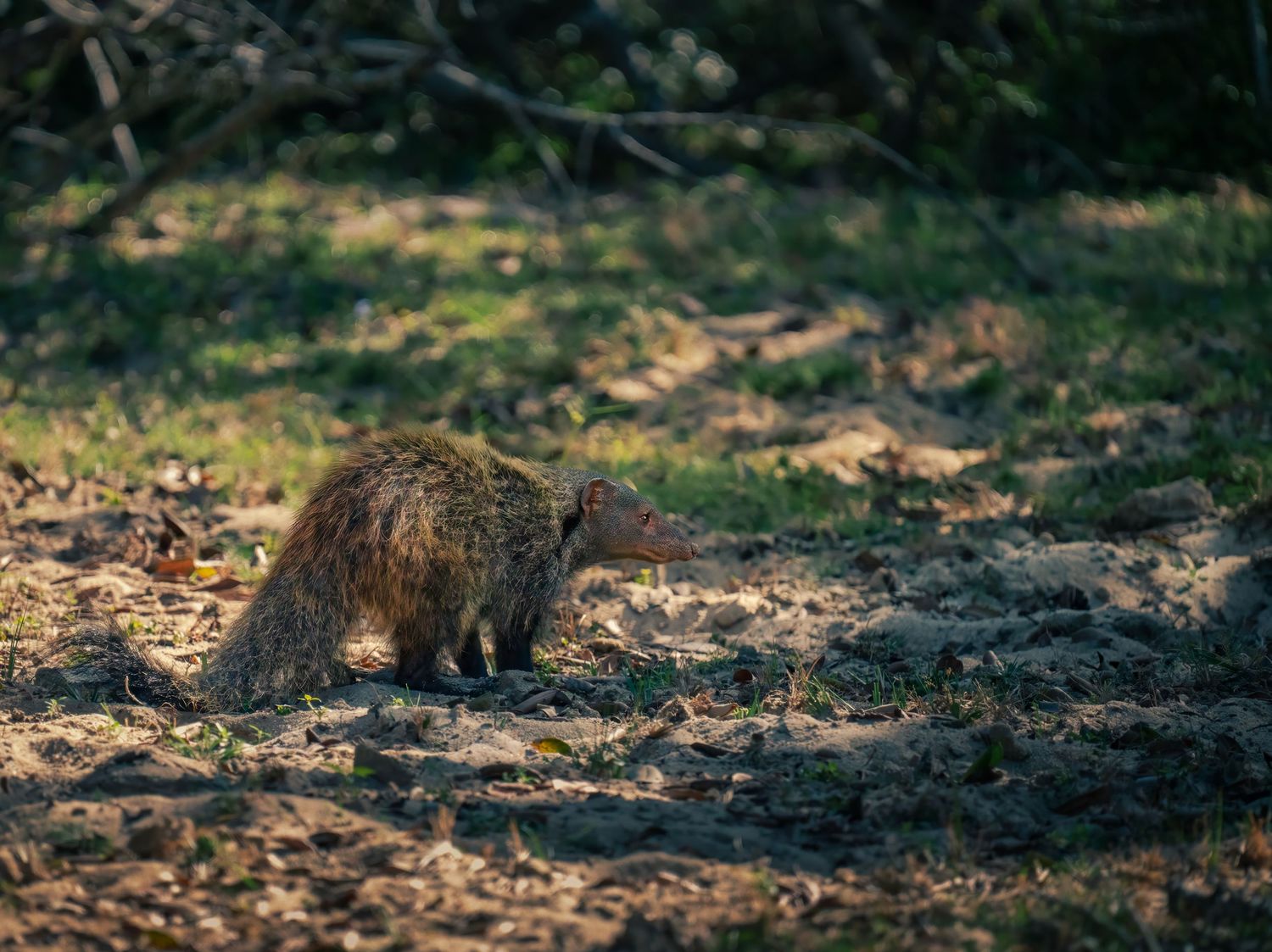
I photographed this mongoose on safari in Wilpattu National Park in Sri Lanka. I love the photograph, and I love the animal. That is where this story starts. There was no grand concept behind it that I need to invent afterwards.
My husband's nephew Avi, a naturalist in Sri Lanka, tells me mongooses make great pets. It is the sort of family conversation that stays attached to a photograph. I can see the appeal in that pointed face and wonderfully untidy coat. Here, though, the pleasure is seeing a wild animal in its own surroundings: low to the ground, half absorbed by the colours of the forest floor.
On a safari, attention can become very selective. A leopard is a headline. A mongoose is easier to drive past. This photograph is my argument for giving the smaller encounter some time.
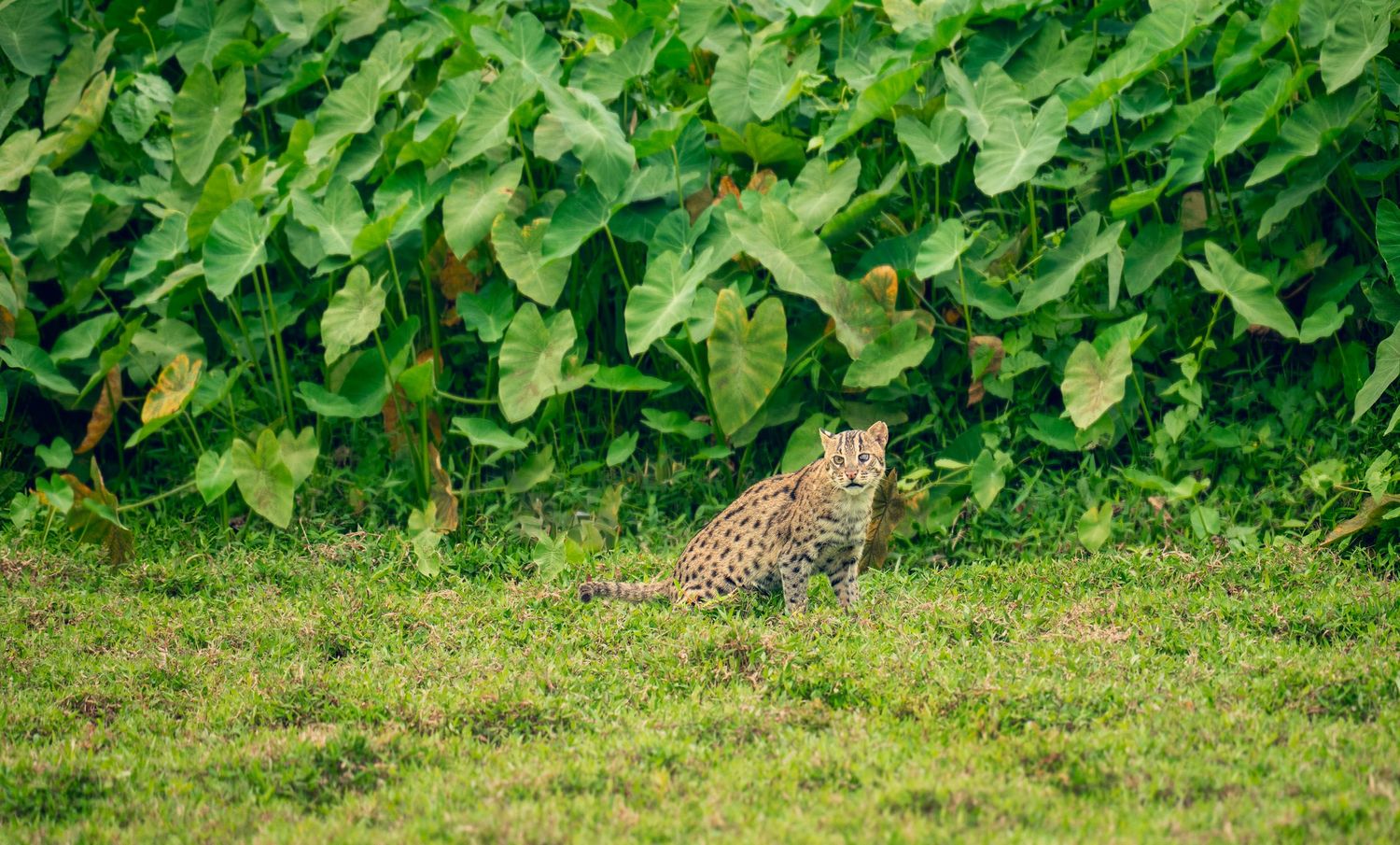
That willingness to notice smaller animals also runs through [my encounter with a fishing cat near Colombo](https://www.kian.photography/blog/fishing-cat-sri-lanka/), although the two photographs came about very differently.
Wilpattu beyond the headline animals
Wilpattu lies in northwestern Sri Lanka, with a landscape shaped by dry forest, scrub, open ground and water. Its distinguishing features are the *villus*: shallow natural basins, often edged with sand, that collect water. They interrupt the woodland and create places where the surrounding landscape opens out. The national park forms the main part of the internationally recognised [Wilpattu Ramsar Wetland Cluster](https://www.ramsar.org/news/sri-lankas-wilpattu-ramsar-wetland-cluster).
That variety of habitat matters. Wilpattu supports Sri Lankan leopards, Asian elephants and sloth bears, alongside spotted deer, sambar, wild boar, langurs and smaller mammals. Around its waters, birds and crocodiles occupy a different part of the same ecological picture. These are possibilities, not a checklist that any single safari is obliged to deliver. The park's [wildlife field records](https://www.wilpattu.com/about-willpattu-national-park.php) give a sense of how much lives between the famous sightings.
For photography, those changes in habitat also mean changes in light. An open stretch can be bright and exposed; beneath the trees, small patches of sun break across a much darker ground. In this photograph, that broken light is almost a second subject. It describes the place the mongoose belongs to.
A small predator with a busy world at its feet
“Mongoose” is a family name in everyday language, rather than the name of one interchangeable animal. More than one species occurs in Wilpattu, so I am keeping the identification here at mongoose rather than forcing a species label onto this frame.
These animals deserve more attention than their familiar reputation as snake fighters allows. For example, the Indian grey mongoose has a varied diet that includes insects, small vertebrates and eggs, as well as some plant foods. The ruddy mongoose is also recorded in Wilpattu; naturalist field observations describe both hunting and scavenging. Their food and habits vary by species, but the broader point is that much of a mongoose's life involves searching for small, available meals. [Indian grey mongoose account](https://animaldiversity.org/accounts/Herpestes_edwardsi/); [Wilpattu ruddy mongoose observations](https://www.wilpattu.com/species-ZebraBlue-65).
Look at the body in my photograph: the short legs, long back, small rounded ear and muzzle projecting into the space ahead. There is nothing ornamental about that shape. It brings the animal close to the ground and to everything concealed within it.
Why this photograph works for me
The mongoose sits left of centre, looking into a broad area of open ground. That space gives its gaze somewhere to go. A tighter crop could make the face larger, but it would also remove much of the encounter: the leaves, rough earth, sticks and alternating patches of light.
The animal's brown coat overlaps with the colour and texture of the ground. That makes this a quieter photograph than a brightly lit animal against a clean background. You have to find it, then stay with it. Once you do, the rounded back and narrow face give it a clear silhouette, while the light catches individual strands along its coat.
The dark woodland above and the shadow at the lower edge hold the brighter ground between them. Those shadows give the picture depth without needing a dramatic sky or an imposing subject. The restrained green and brown palette keeps everything in the same world.
This is what I enjoy about an environmental wildlife photograph: the surroundings remain part of the animal's identity. The picture lets the mongoose be small in a large place. It does not need to perform for the camera to be worth looking at.